The open-source DocuSign and DocSend.
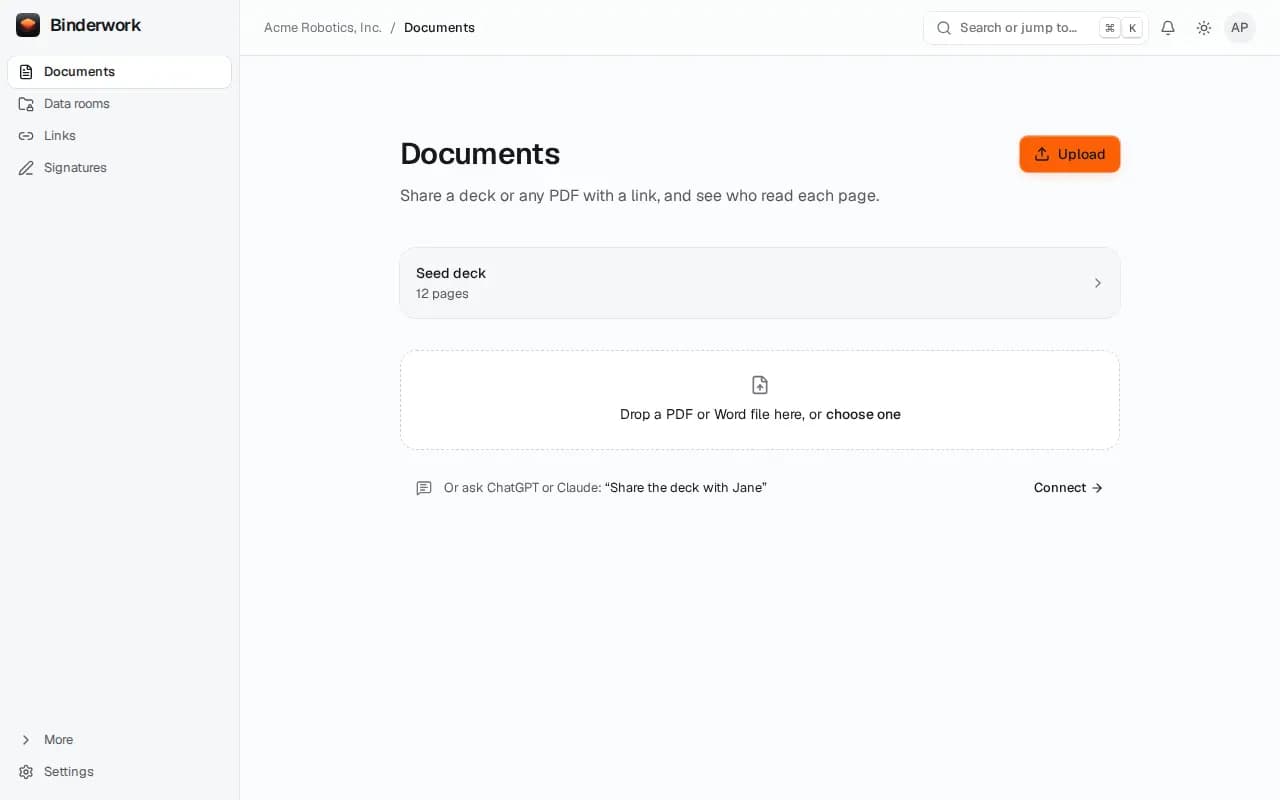
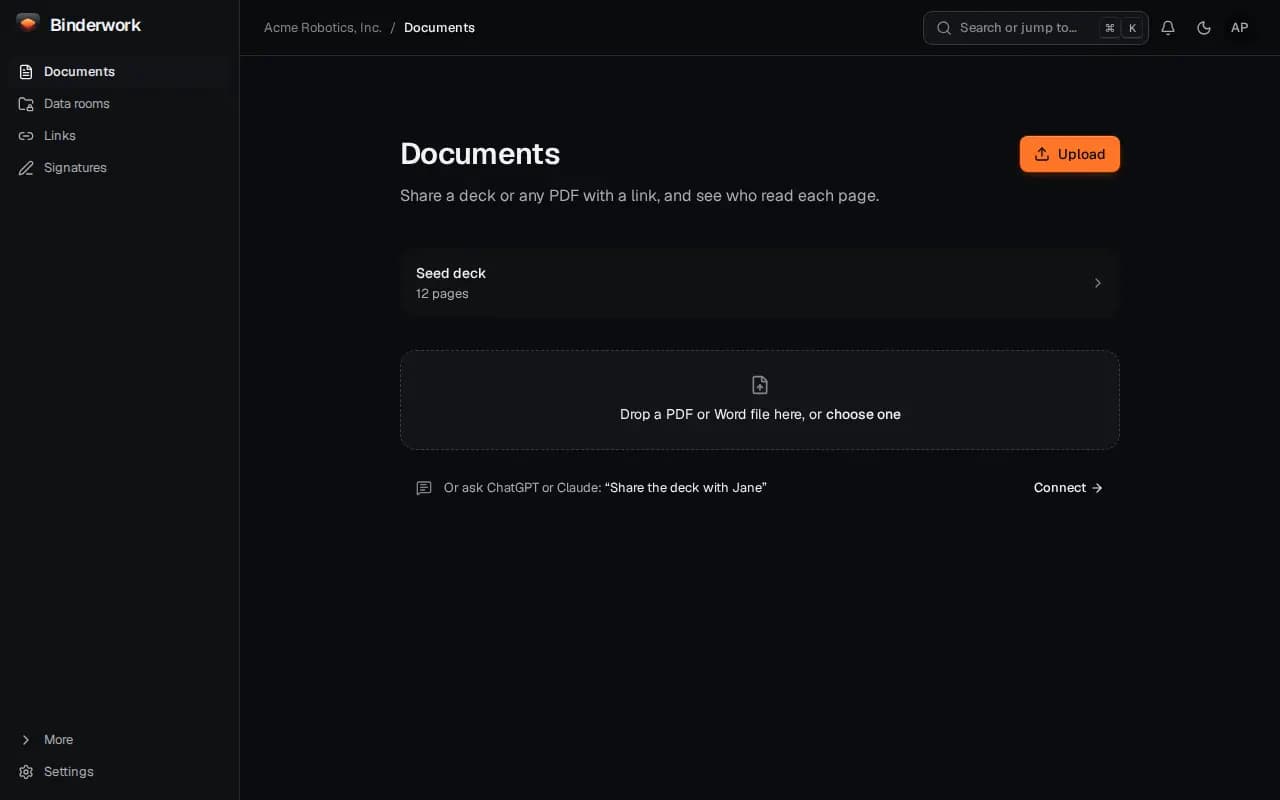
Share decks and get signatures, in the app or by asking ChatGPT or Claude. Free.
AI-native
Ask in ChatGPT or Claude. Approve with a passkey.
One sentence in your chat. Anything that reaches someone waits for your tap.
ChatGPT or Claude
BinderworkShare the seed deck with Jane at Sequoia. No downloads, until Friday.
Here's a link for Jane Doe. It works once you approve it.
Share Seed deck with Jane Doe, Sequoia
Nothing happens until you approve it in Binderwork.
- Downloads
- Off
- Expires
- Friday, October 9
- Reader
- Asked for their email
→ link_create
Example conversations, with example data.
Instead of DocSend
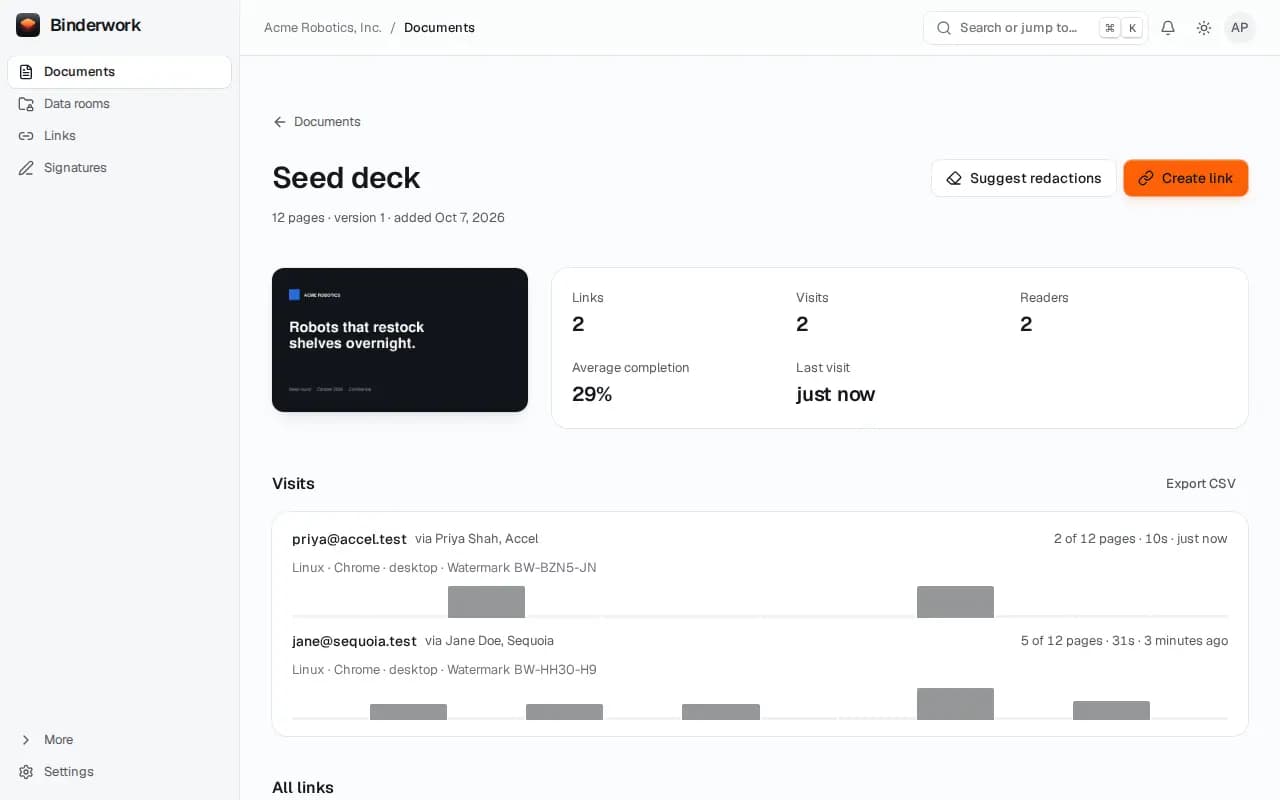
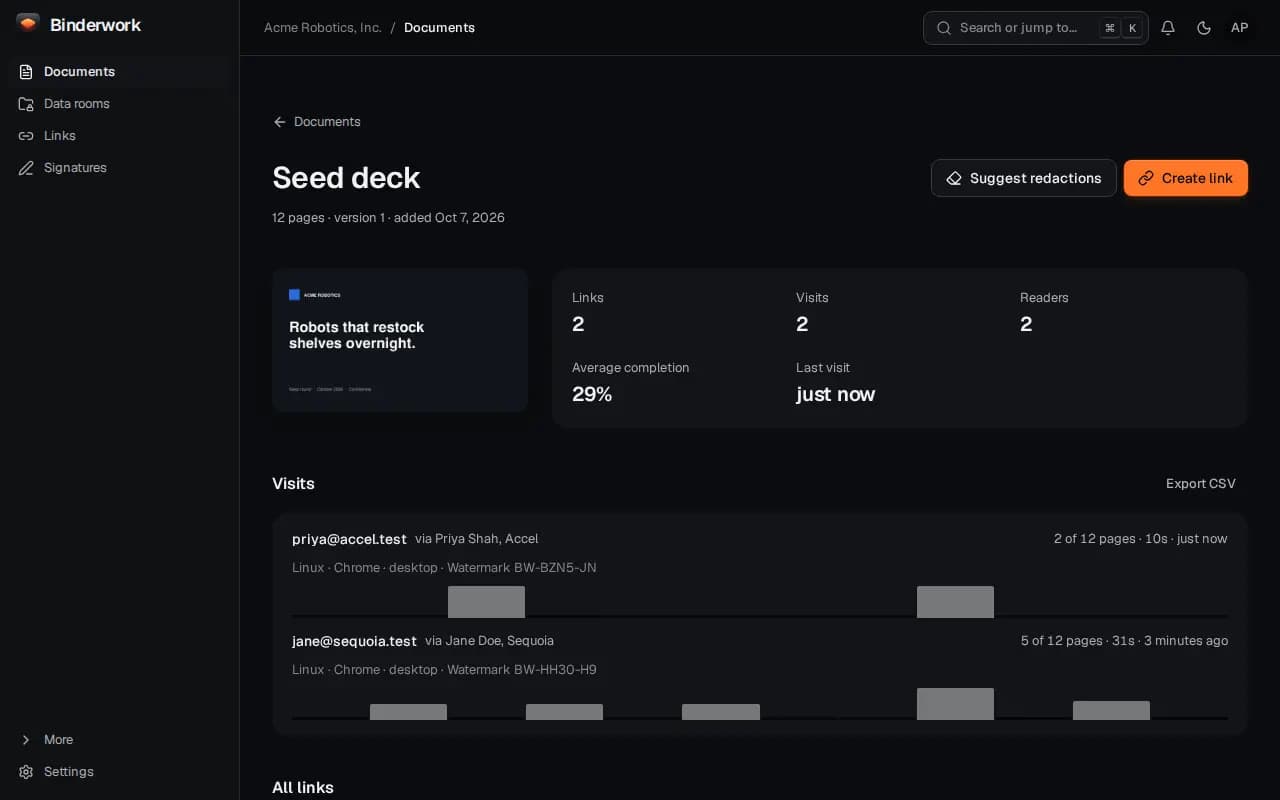
Know who read the deck, page by page.
A link for each investor, and the time they spent on every page.
Instead of DocuSign
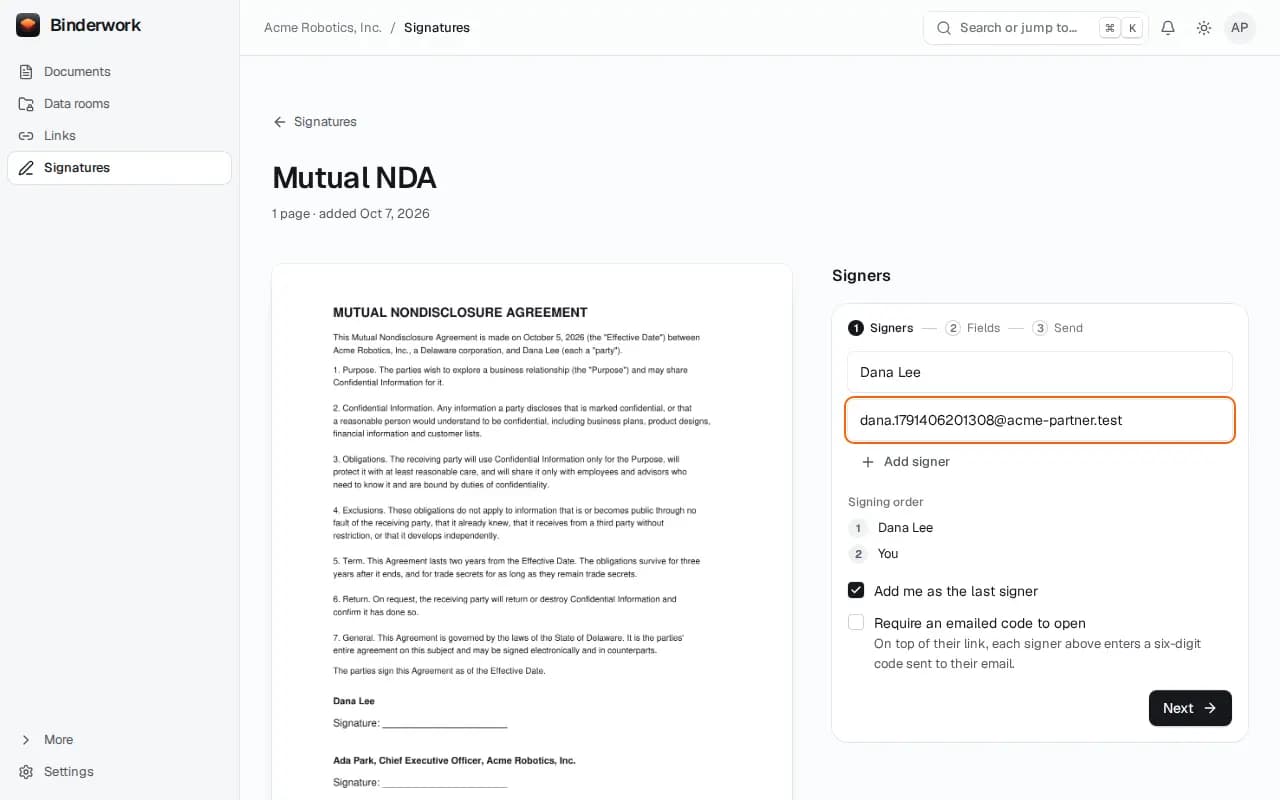
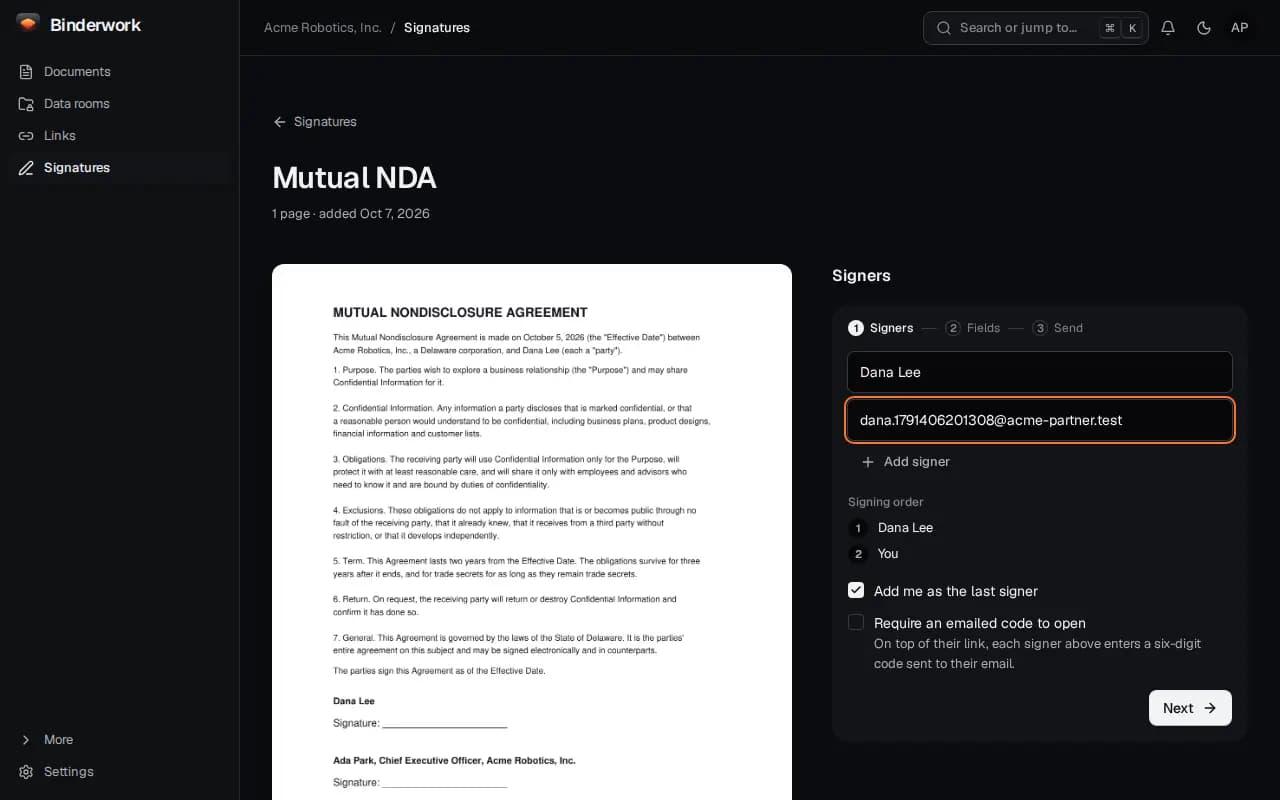
Send it for signature. Signed on any phone.
Signing order, reminders and a sealed certificate, with no envelope limit.
Instead of Ashby
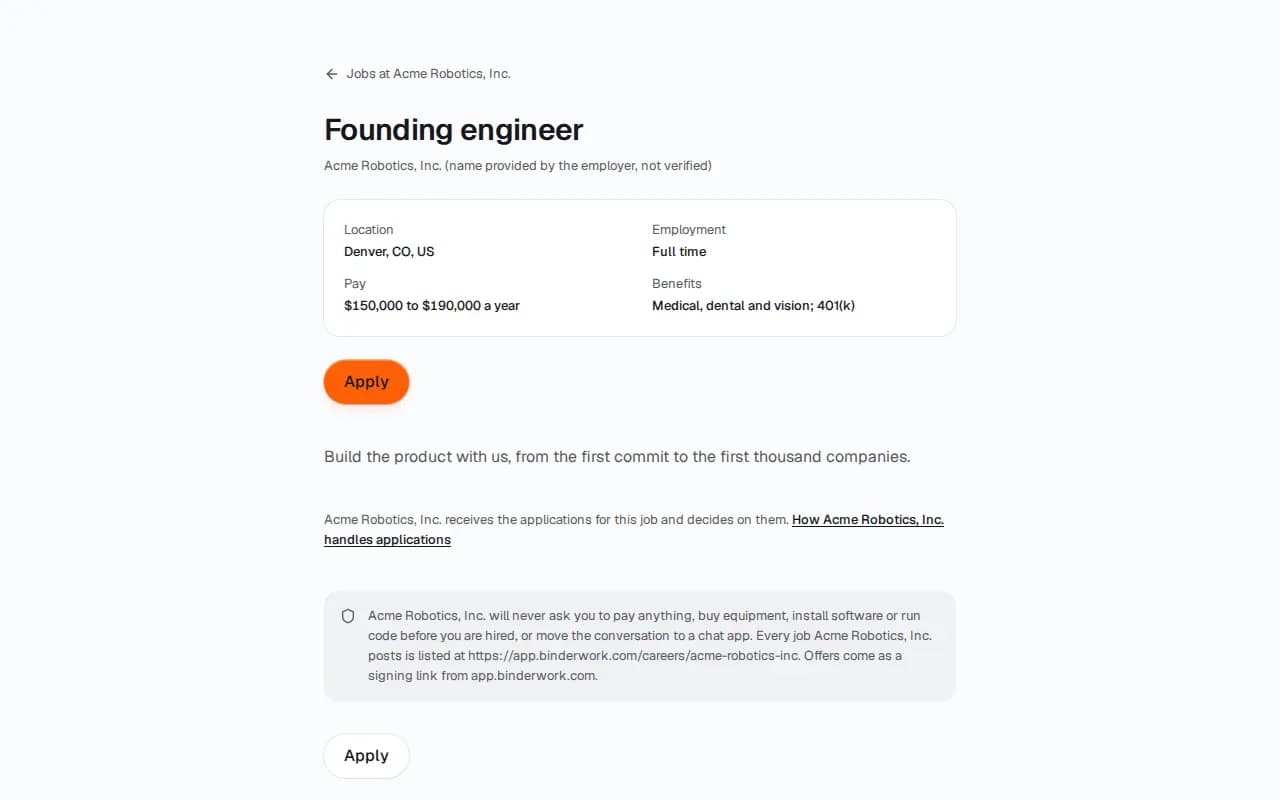
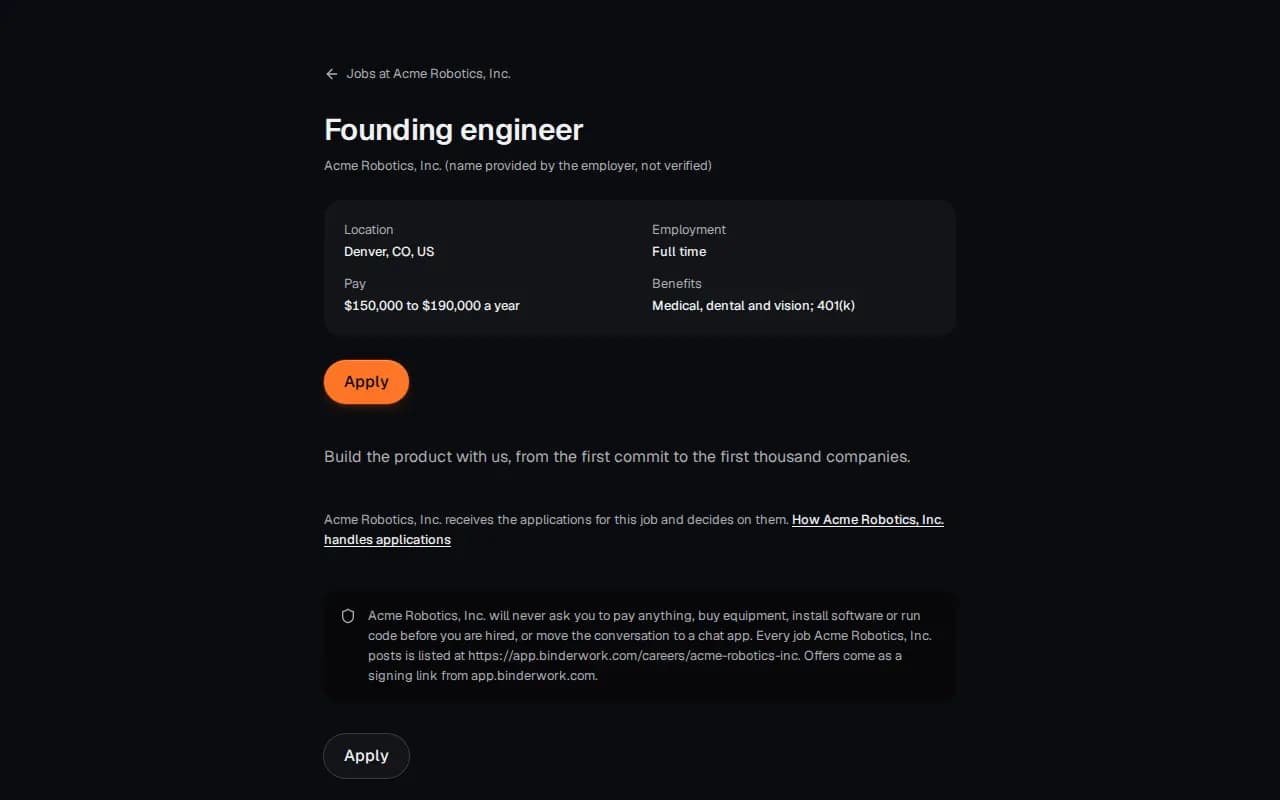
Post the job, run the pipeline, sign the offer.
A careers page, a board for every job, and offers signed in the same place.
Raise on SAFEs
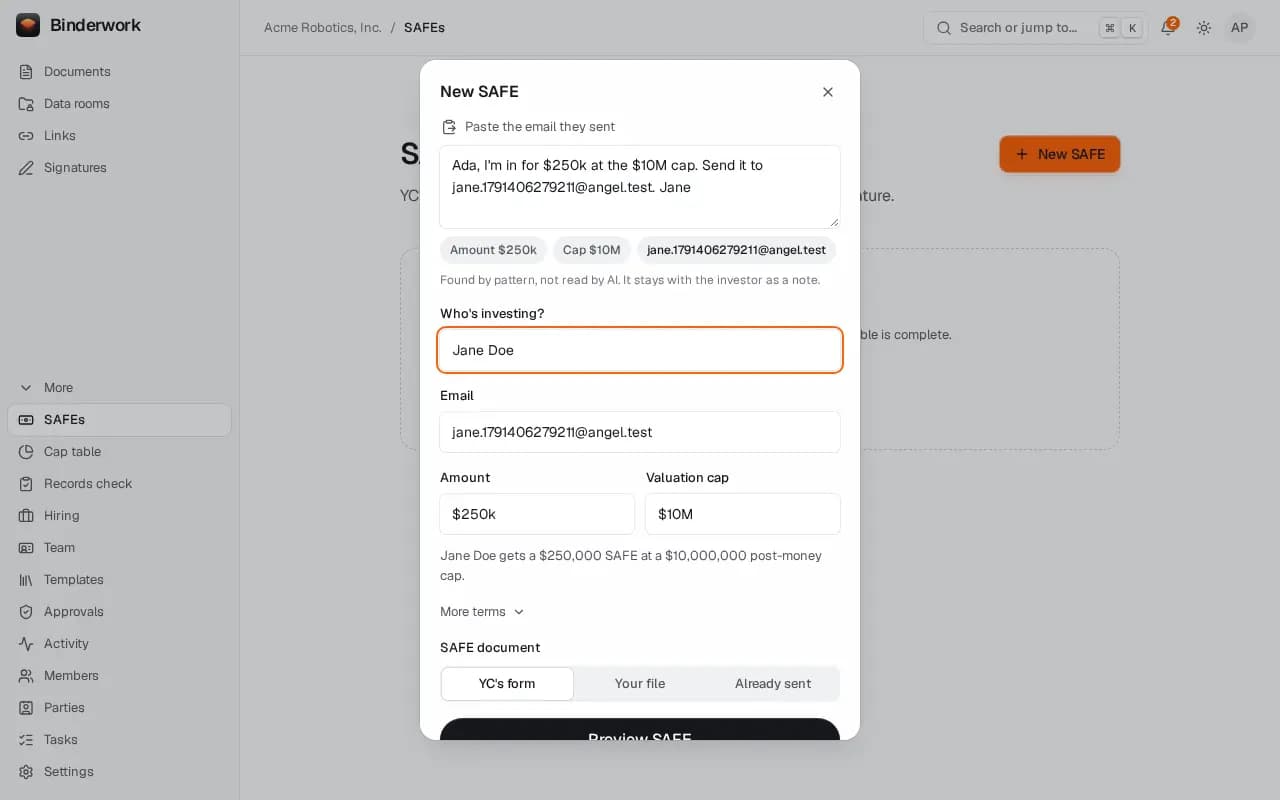
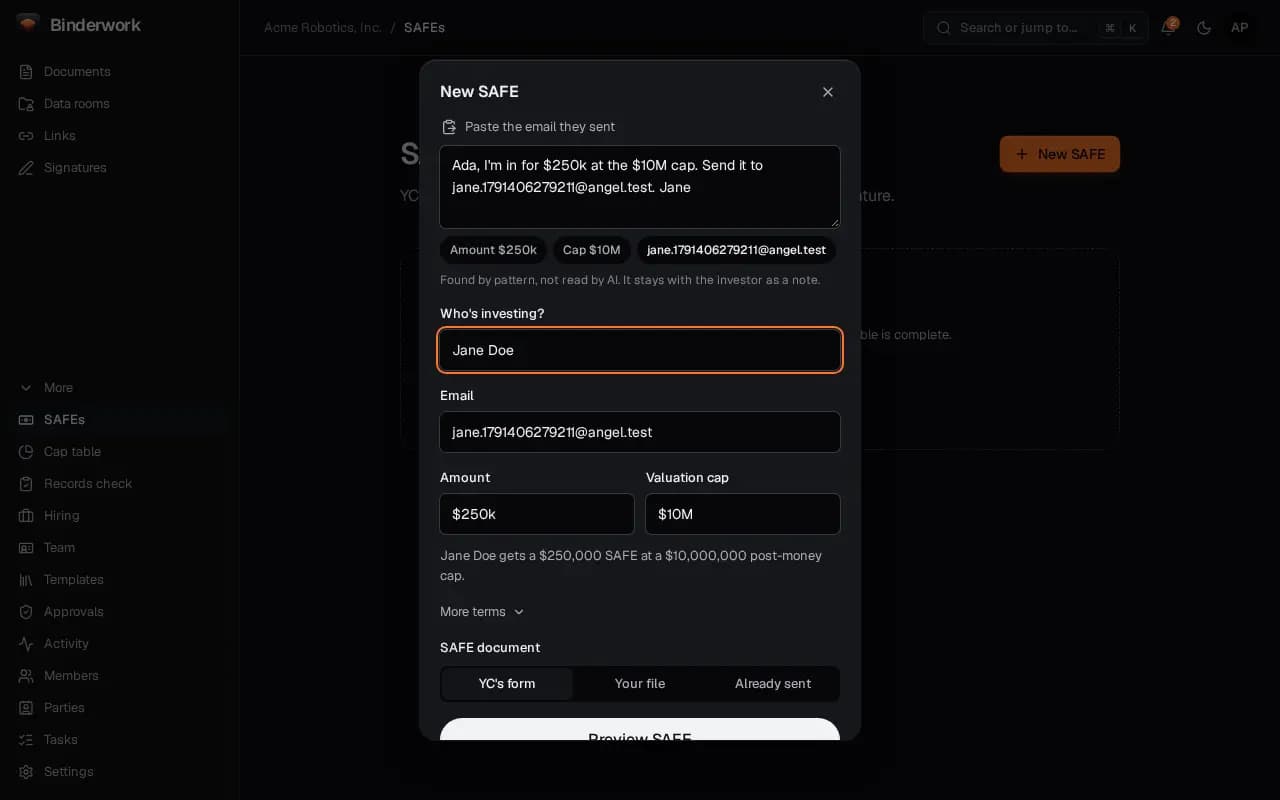
Your SAFE round, on the same record.
The investors who read the deck get their SAFE from the same place.
Your binder
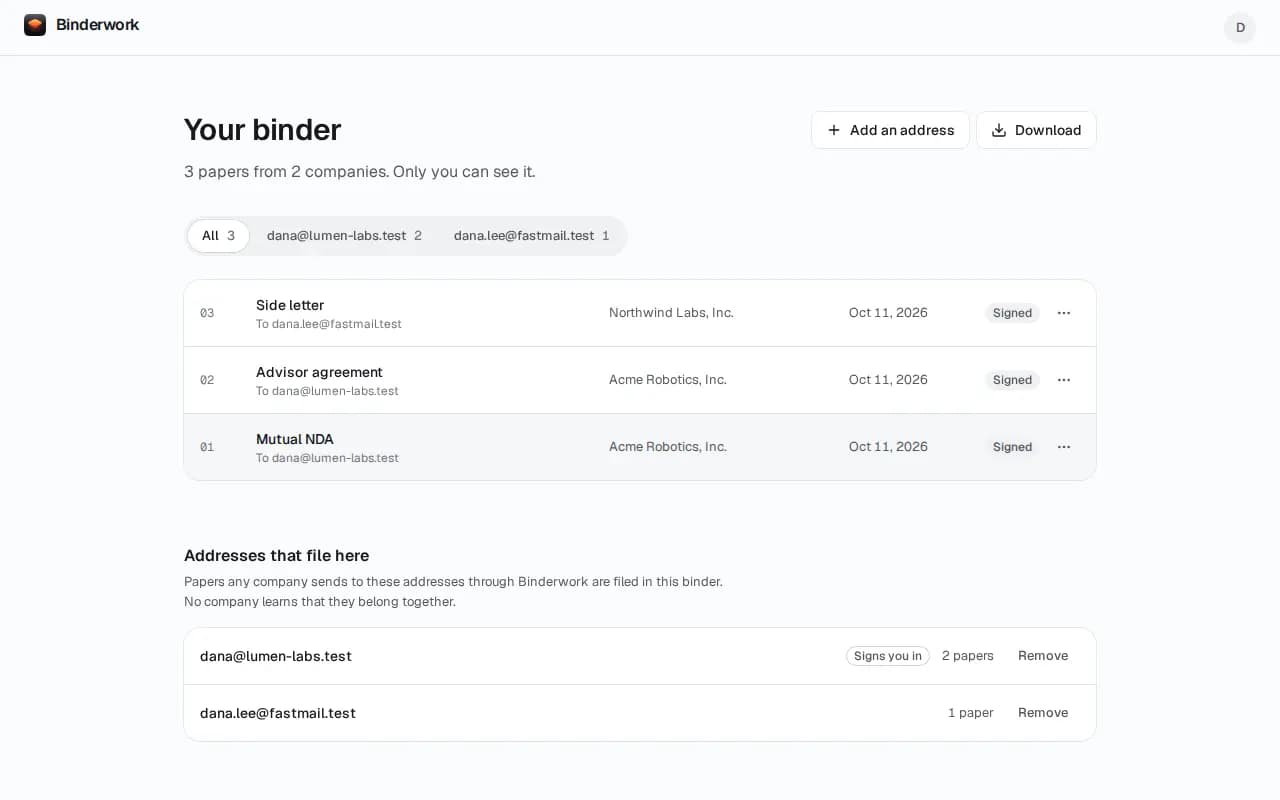
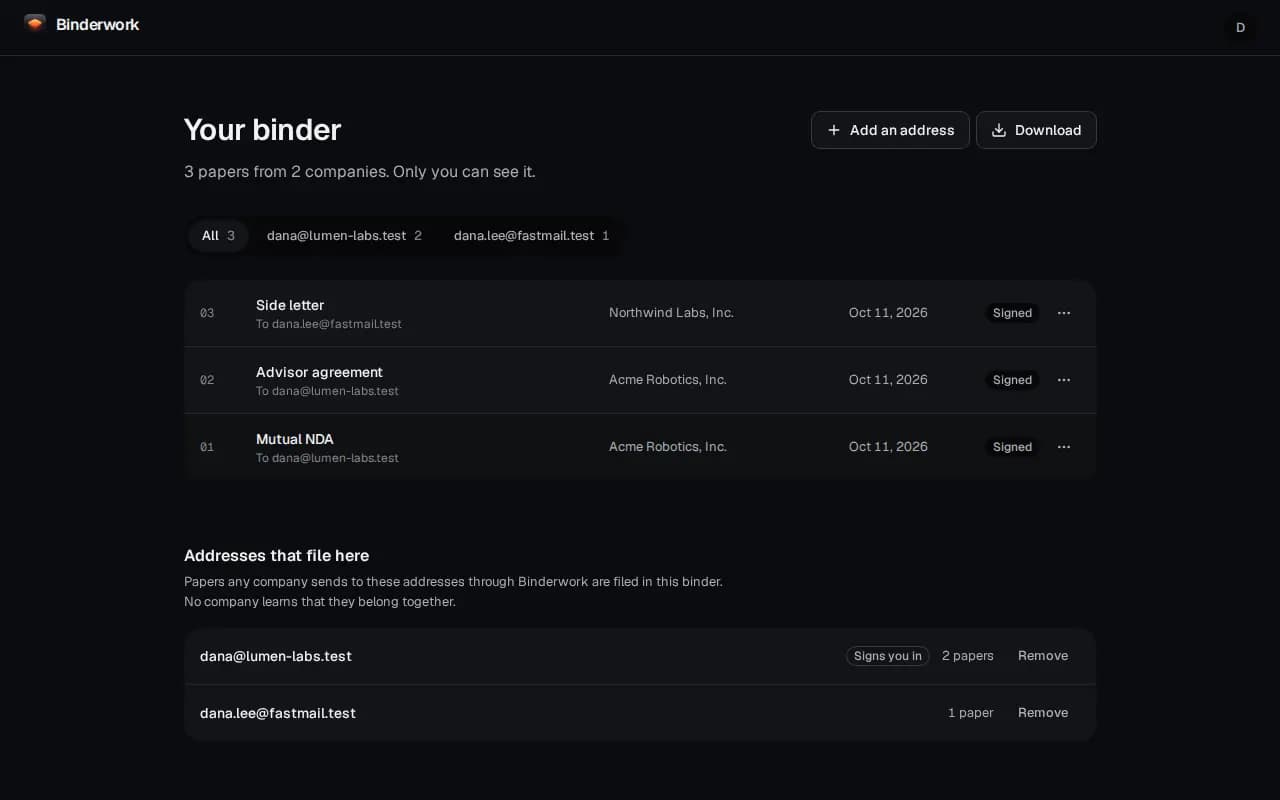
Every paper you sign, in a binder of your own.
Signed copies and NDAs from every company, in one place only you can see.
Pricing
$0every feature, no seats
FAQ
The fine print, upfront.
Can it really replace DocuSign and DocSend?
For a startup's everyday work, yes: decks shared with page-by-page analytics, email gates, watermarks and data rooms, and documents signed with signing order, templates, bulk send, reminders and a sealed certificate of completion. DocuSign and DocSend do more for large companies, such as qualified electronic signatures, CRM integrations and enterprise compliance programs; each comparison page lists where they are better.
Is it really free?
Yes. The software is open source under AGPL-3.0 with every feature in it, and hosted Binderwork is free, with what that includes written down on the pricing page. Binderwork never charges a fee tied to a signature, a closed round or a share transfer.
Are the signatures legally binding?
Binderwork follows the evidence practices of the US ESIGN Act and UETA: consent to sign electronically, an explicit Sign step, a seal with a timestamp that shows any later change, and a full audit trail. In the EU these are simple electronic signatures. Some documents, such as wills, can't be signed electronically at all. This is not legal advice.
Do investors and signers need an account?
No. Readers open the link in their browser, after giving or confirming their email if you ask for it. Signers sign on a phone or a laptop without signing up.
What does my assistant see, and can it send things on its own?
It sees what it asks Binderwork for while you chat, such as a document's title, who read it or who has signed. Anything that reaches another person waits for your tap in Binderwork. Binderwork itself doesn't send your documents to an AI model, and nothing you upload trains one.
Can I run it myself?
Yes, that is the point of the license: it runs on one Linux server with Postgres, and LibreOffice for Word files. The source opens to everyone with the first public release; until then, hosted Binderwork is free and every record exports in open formats.

Send the next deck and the next contract from here.
Start free on hosted Binderwork, or add it to ChatGPT or Claude and ask it to share the deck.